top of page


Local Integrator vs National Automation Company, Which Is the Better Choice?
A local automation integrator offers flexibility, faster response, and closer collaboration.
A national automation company brings scale, resources, and brand recognition.
The right choice is not about size.
It is about how your project is delivered, how quickly issues are resolved, and how well your partner understands your site.
3 min read


SCADA Upgrade vs Patch & Maintain, Which Approach Actually Reduces Risk?
Patching and maintaining a SCADA system can keep it running in the short term.
But over time, it often increases risk, downtime, and operational cost.
A SCADA upgrade addresses root issues, improves visibility, and supports long-term reliability.
The real decision is not about cost today.
It is about risk and performance over time.
3 min read
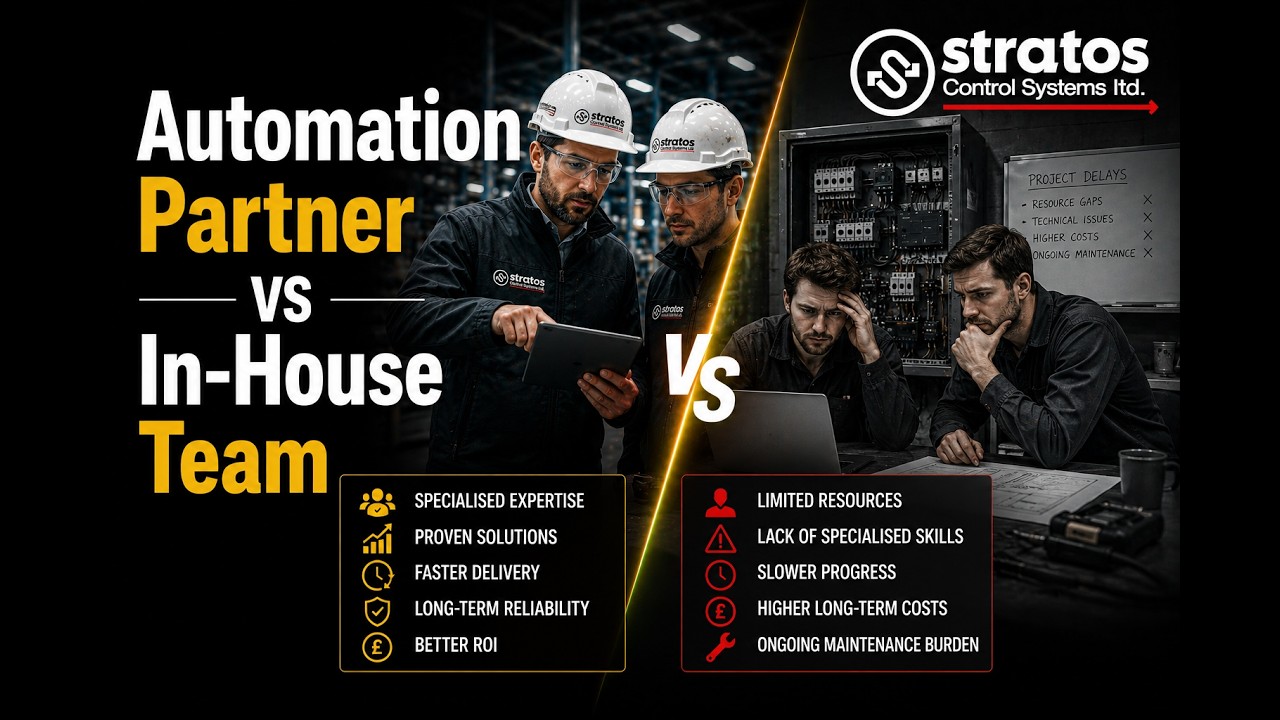
Automation Partner vs In-House Team, Which Delivers Better Results?
An in-house automation team offers control and familiarity with your site. An automation partner brings specialist expertise, scalability, and structured delivery. For most industrial businesses, the best results come from combining both, not choosing one over the other. Watch how to balance internal teams with external expertise, and why relying on just one often creates limitations. Automation Partner vs In-House Team, Side-by-Side Factor In-House Team Automation Partner Co
3 min read

Retrofit vs New Automation System, Which Is the Better Long-Term Decision?
A retrofit, upgrading an existing system, is ideal when your setup is structurally sound but needs modernisation.
A new automation system is the better option when your current system is limiting performance, increasing downtime, or cannot support future requirements.
The right decision is not based on upfront cost alone, it is based on risk, downtime, scalability, and total cost over time.
3 min read


PLC Upgrade vs Full System Replacement, Which Is the Smarter Investment?
A PLC upgrade is suitable when your existing system is structurally sound but relies on outdated hardware.
A full system replacement is the better option when your system is causing recurring downtime, lacks scalability, or has become difficult to maintain while costs are quietly increasing.
3 min read


Cost of Downtime vs Automation Upgrade, What Industrial Sites Get Wrong
For most industrial sites, the cost of downtime far exceeds the cost of an automation upgrade, often within months, not years.
While upgrades are seen as a capital expense, downtime is an ongoing operational cost that compounds through lost production, inefficiency, and reactive maintenance.
3 min read


Facilities Automation Audit Checklist, Is Your Site Running Reliably or Carrying Hidden Risk?
Most facilities operate with a mix of legacy systems, partial upgrades, and inconsistent documentation. Over time, this creates hidden risk, increasing downtime, maintenance costs, and operational complexity.
4 min read


Automation Project Budget Risk Checklist, Avoid Cost Overruns Before They Happen
This checklist helps you quickly assess whether your project is properly scoped, planned, and controlled, before costs escalate.
3 min read


Compliant vs Non-Compliant Control Systems, The Hidden Risks Most Projects Ignore
At a glance, two control systems can look identical.
Both might run the process. Both might pass initial testing.
But only one is safe, compliant, and built for long-term operation.
The other?
4 min read


What a Good Automation Partner Actually Delivers
Not all automation partners deliver the same value.
On paper, many system integrators look similar, they offer PLC programming, control panel builds, and SCADA systems.
3 min read


Why Documentation Matters More Than Hardware in Industrial Control Systems
When designing or upgrading a control system, most attention goes to hardware.
PLC choice, components, panel build quality and enclosure specification are all important.
3 min read


How to Standardise Control Systems Across Multiple Sites
As industrial operations expand across multiple sites, control systems often evolve without a clear strategy.
3 min read


Automation System Integrator vs OEM, What’s the Difference & Which Should You Choose?
OEMs and automation system integrators both play important roles in industrial automation. OEMs provide specialised equipment and automation designed for specific machines, while integrators focus on connecting technologies into reliable and scalable automation environments.
Understanding the distinction between these roles can help organisations plan automation projects more effectively and ensure systems are designed for long-term operational success.
3 min read
Industrial Automation Modernisation
Industrial automation has transformed manufacturing, processing, and production industries over the past several decades. Today, automation systems are responsible for controlling complex operations that would be impossible to manage manually.
3 min read


What Makes a Good Control Panel Design?
When control panels are designed well, they make maintenance easier, troubleshooting faster, and system reliability significantly higher.
3 min read
bottom of page