top of page


Industrial Networking Explained: EtherNet/IP, PROFINET and Modbus TCP
Modern industrial machinery relies on communication.
A PLC may need information from remote I/O located elsewhere on a production line. A variable speed drive needs to receive speed commands. An HMI needs access to machine data. A SCADA system may collect information from multiple PLCs, while different pieces of production equipment need to exchange status information with one another.
7 min read


What Is BS EN 61439? A Guide to Low-Voltage Control Panel Standards
f you are specifying, purchasing or upgrading an industrial control panel, you may have come across the term BS EN 61439. But what does the standard actually cover, and why should it matter to the people responsible for industrial equipment?
6 min read


Local Integrator vs National Automation Company, Which Is the Better Choice?
A local automation integrator offers flexibility, faster response, and closer collaboration.
A national automation company brings scale, resources, and brand recognition.
The right choice is not about size.
It is about how your project is delivered, how quickly issues are resolved, and how well your partner understands your site.
3 min read

Legacy PLC vs Modern Systems, What’s Costing You More Than You Think?
Legacy PLC systems can still run.
But they often come with increasing downtime, limited support, and growing operational risk.
Modern PLC systems offer improved reliability, faster fault finding, better integration, and long-term support.
3 min read
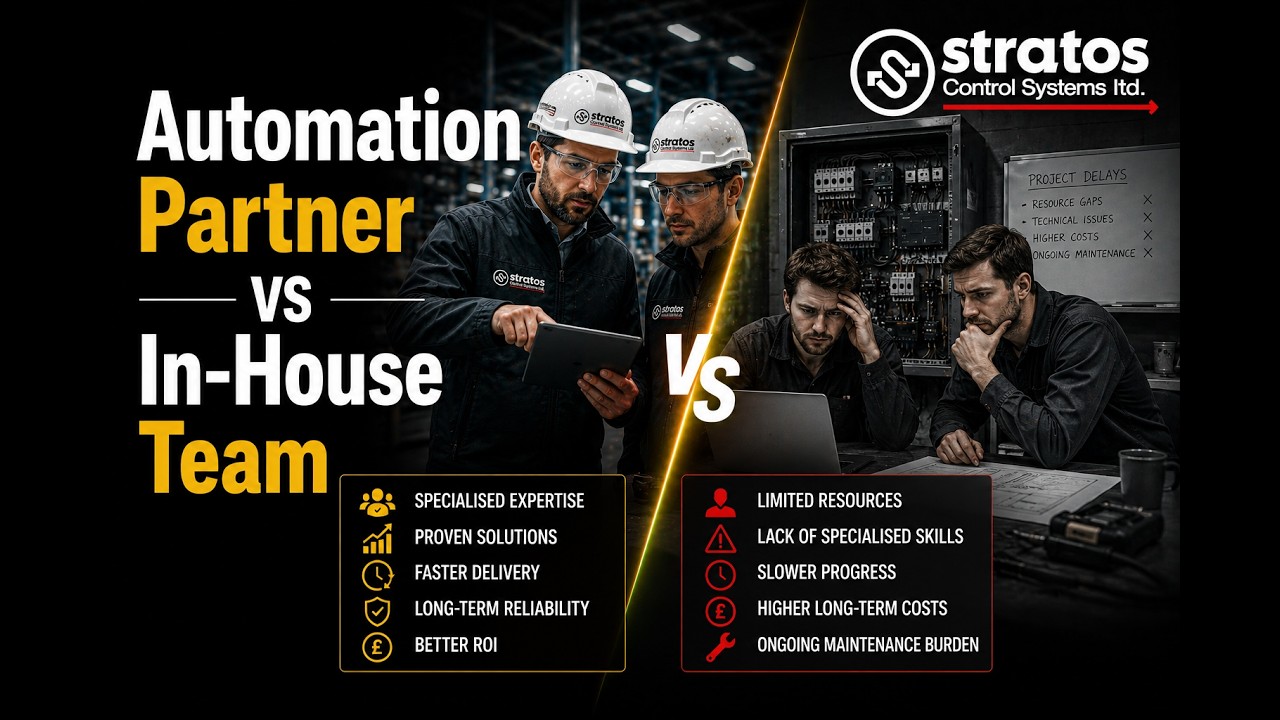
Automation Partner vs In-House Team, Which Delivers Better Results?
An in-house automation team offers control and familiarity with your site. An automation partner brings specialist expertise, scalability, and structured delivery. For most industrial businesses, the best results come from combining both, not choosing one over the other. Watch how to balance internal teams with external expertise, and why relying on just one often creates limitations. Automation Partner vs In-House Team, Side-by-Side Factor In-House Team Automation Partner Co
3 min read


Cost of Downtime vs Automation Upgrade, What Industrial Sites Get Wrong
For most industrial sites, the cost of downtime far exceeds the cost of an automation upgrade, often within months, not years.
While upgrades are seen as a capital expense, downtime is an ongoing operational cost that compounds through lost production, inefficiency, and reactive maintenance.
3 min read


What Causes Automation Projects to Go Over Budget?
Automation projects rarely go over budget because of one big mistake.
They go over budget because of small gaps in scope, planning, and execution that compound as the project progresses.
3 min read


The ROI of Modernising Legacy PLC Systems, Why Waiting Costs More Than Upgrading
Legacy PLC systems rarely fail overnight.
They degrade slowly, becoming harder to maintain, less reliable, and increasingly expensive to support.
That is why many businesses delay upgrades.
3 min read


Industrial Automation Lifecycle Cost vs Install Cost
When evaluating an automation project, most decisions are based on a single number:
Install cost.
It is the most visible figure, and often the easiest to compare between suppliers.
But in reality, install cost is only a small part of the total cost of a control system.
The larger cost, and the one that impacts your operation long-term, is lifecycle cost.
4 min read


How to Reduce Reliance on Individual Engineers in Industrial Control Systems
In many industrial environments, certain engineers become essential to keeping systems running.
3 min read


Automation Integration Services
Disconnected systems, inconsistent PLC and SCADA design, and unclear project scope lead to delays, downtime, and long-term maintenance issues.
3 min read


How to Standardise Control Systems Across Multiple Sites
As industrial operations expand across multiple sites, control systems often evolve without a clear strategy.
3 min read


Automation System Integrator vs OEM, What’s the Difference & Which Should You Choose?
OEMs and automation system integrators both play important roles in industrial automation. OEMs provide specialised equipment and automation designed for specific machines, while integrators focus on connecting technologies into reliable and scalable automation environments.
Understanding the distinction between these roles can help organisations plan automation projects more effectively and ensure systems are designed for long-term operational success.
3 min read


Top Causes of Industrial Automation Downtime (And How to Prevent It)
Industrial automation downtime rarely results from a single fault. Instead, it often reflects underlying issues within automation architecture, system visibility, or equipment reliability.
By understanding the common causes of automation downtime, organisations can take proactive steps to improve system stability and operational resilience.
3 min read


PLC vs SCADA, What Engineers Need to Know in Industrial Automation
PLC and SCADA technologies serve different but complementary roles in industrial automation. PLC systems provide the reliable control required to operate machinery, while SCADA platforms deliver the visibility needed to manage production environments effectively. Together, they form the backbone of modern industrial automation systems.
3 min read


How to Choose a Control Panel Manufacturer (UK Guide for Industrial Buyers)
Choosing a control panel manufacturer involves far more than selecting a supplier to assemble electrical equipment.
The right partner can help ensure that automation systems are reliable, maintainable, and designed for long-term operational success.
3 min read


Why Industrial Control Systems Fail, and What Engineers See on Real Sites
Many UK industrial sites still rely on legacy automation infrastructure, ageing PLC hardware, and poorly documented control panels, which significantly increases the likelihood of system faults. Understanding the causes of industrial control system failures is critical for maintaining reliability and operational continuity.
3 min read
bottom of page