How to Standardise Control Systems Across Multiple Sites
Updated: May 1
Why Standardisation Becomes Critical as Operations Grow

As industrial operations expand across multiple sites, control systems often evolve without a clear strategy for control panel design and build.
Different engineers, different suppliers, and different technologies lead to systems that function, but lack consistency.
At first, this may not cause immediate problems. But over time, it creates:
Increased maintenance complexity
Slower fault finding
Higher reliance on individual knowledge
Difficulty scaling or replicating systems
Standardising industrial control panel solutions is not just about consistency. It is about reducing risk, improving performance, and enabling long-term growth.
What Happens When Control Systems Are Not Standardised?
Across multiple sites, it is common to see:
Different PLC platforms and programming styles
Inconsistent control panel layouts and labelling
Varying documentation standards
No unified system architecture
This leads to real operational challenges:
Engineers must relearn each system
Fault finding becomes slower and less predictable
Knowledge becomes fragmented across teams
Upgrades and expansions become more complex
Without standardisation, every system becomes a one-off.
What Standardisation Should Achieve
A structured approach to standardisation should:
Create consistency across sites and systems
Reduce reliance on individual engineers
Improve fault finding speed
Simplify maintenance and support
Enable scalable, repeatable solutions
The goal is not to remove flexibility, but to create a consistent foundation that supports growth.
What to Standardise in Control Systems
PLC Programming Structure
Standardise program architecture, naming conventions, and alarm handling.
This allows engineers to quickly understand and troubleshoot systems across different sites.
Hardware Platforms (Where Practical)
Where possible, standardise PLC platforms, I/O modules, and communication protocols.
This reduces training requirements and simplifies spare parts management.
Control Panel Design
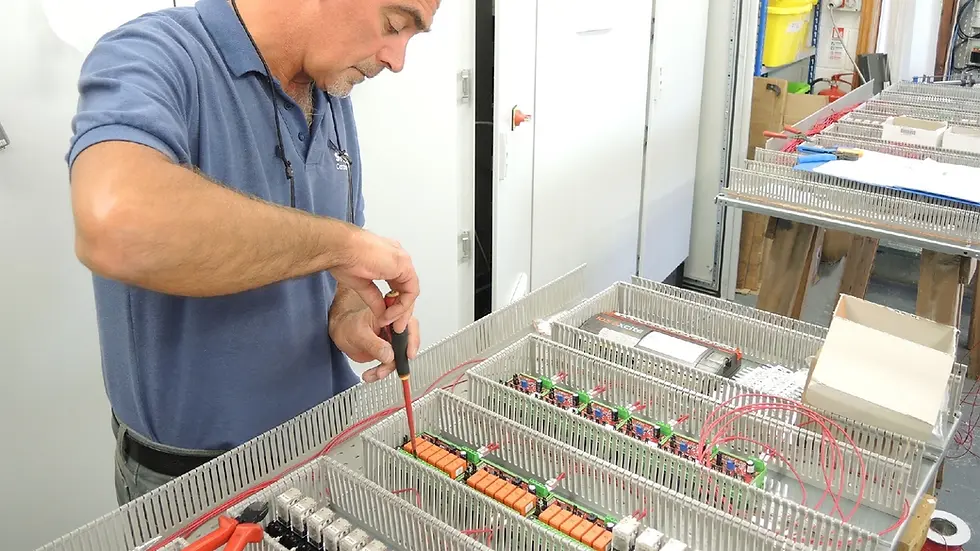
Standardise panel layouts, labelling conventions, and wiring structures.
This improves clarity and enables faster fault finding. EPLAN control panel design.
Documentation Standards
Ensure all systems follow consistent formats, including drawings, I/O lists, and version control.
Reliable documentation reduces risk and supports long-term maintenance.
PLC to SCADA Integration
Standardise tag naming, data structures, and alarm handling.
This creates cleaner integration and improves system visibility.
What Not to Over-Standardise
Avoid forcing identical solutions across completely different processes.
Overly rigid systems can limit flexibility and reduce efficiency.
Effective standardisation allows controlled variation, not restriction.
A Practical Approach to Standardising Control Systems
Step 1: Assess Existing Systems
Review current PLC programs, panels, and documentation.Identify inconsistencies and operational risks.
Step 2: Define a Standard Framework
Develop a structured approach covering programming standards, naming conventions, panel design, and documentation.
Step 3: Prioritise High-Impact Areas
Focus on systems with the highest downtime risk or those undergoing upgrades.
Step 4: Implement Through Projects
Introduce standards through new designs, upgrades, and refurbishments.
Avoid attempting to standardise everything at once.
Step 5: Maintain and Enforce Standards
Apply standards consistently, update documentation, and ensure teams follow the same approach.
The Impact of Standardisation
When control systems are standardised:
Fault finding becomes faster and more predictable
Engineers can move between systems with confidence
Maintenance effort is reduced
Systems are easier to scale and replicate
Without standardisation:
Downtime increases
Support becomes inconsistent
Costs rise over time
The Cost of Not Standardising
Without a structured approach:
Systems become increasingly complex
Maintenance becomes reactive
Knowledge remains siloed
Upgrades become more expensive
Lack of standardisation introduces long-term operational risk.
How Stratos Control Systems Supports Standardisation
Stratos Control Systems works with engineering teams to bring structure and consistency to control systems across multiple sites.
Our approach includes:
Assessing existing systems and identifying risks
Developing practical standardisation frameworks
Designing systems using consistent structures
Supporting upgrades and new projects
Delivering fully documented, scalable systems
What to Know About Control System Standardisation:
What is control system standardisation?
Control system standardisation is the process of creating consistent structures across PLC programming, control panel design, documentation, and system architecture. This improves reliability, simplifies maintenance, and makes systems easier to scale across multiple sites.
Why is standardisation important in industrial automation?
Standardisation reduces downtime, improves fault finding, and allows engineers to work across systems more efficiently. It also reduces reliance on individual knowledge and supports long-term operational consistency.
Can control systems be standardised without replacing existing systems?
Yes, standardisation is typically introduced gradually through system upgrades, new projects, and panel refurbishments. This allows improvements to be made without the cost and disruption of full system replacement.
Looking to Standardise Control Systems Across Multiple Sites?
Creating a structured approach to control systems reduces risk, improves performance, and supports long-term growth.