SCADA Design
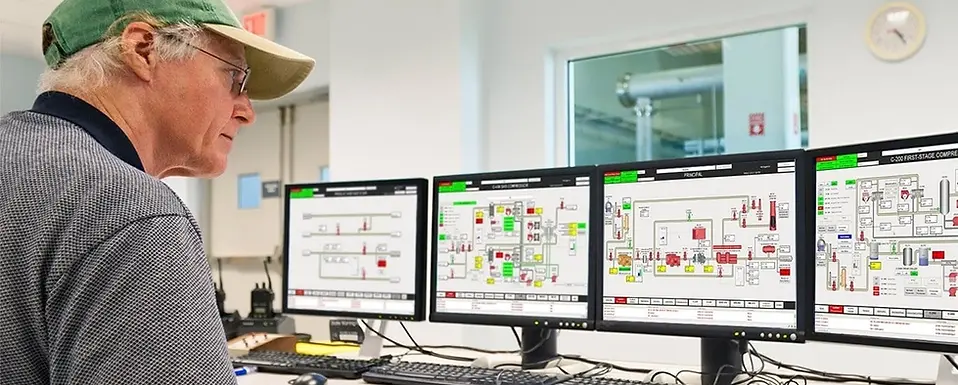
SCADA System Design for Greater Visibility and Control
A well-designed SCADA system gives operators, engineers and production teams the visibility they need to understand what is happening across their plant in real time. From monitoring equipment status and production data to managing alarms and identifying faults, SCADA provides a central interface between your industrial processes and the people responsible for operating them.
Effective SCADA design goes beyond creating screens. The system must be structured around your processes, operational priorities and existing automation infrastructure to ensure information is clear, accessible and useful.
At Stratos, we design SCADA systems that provide greater process visibility, intuitive operator control and reliable integration with PLCs and industrial automation equipment.
What Is SCADA System Design?
SCADA, or Supervisory Control and Data Acquisition, provides centralised monitoring and supervisory control of industrial processes.
SCADA system design involves determining how operational data is collected, communicated, displayed and stored across the automation system.
A typical design may consider:
• PLC and equipment integration.
• System architecture.
• HMI and operator interfaces.
• Alarm management.
• Historical data collection.
• Trending.
• User access and permissions.
• Industrial communications.
• Reporting requirements.
• Future system expansion.
The objective is to create a SCADA system that transforms raw process information into meaningful operational insight.
SCADA System Architecture
The architecture of a SCADA system has a significant impact on its reliability, performance and future scalability.
Our engineers consider factors including:
• Number of PLCs and controllers.
• Operator workstations.
• SCADA servers.
• Industrial networks.
• Remote I/O.
• Data storage requirements.
• Redundancy requirements.
• Existing automation infrastructure.
• Future expansion.
The right architecture provides a reliable foundation while allowing the system to grow alongside your operation.
PLC and SCADA Integration
Reliable communication between the SCADA system and PLCs is fundamental to effective process monitoring and control.
We design SCADA solutions that integrate with PLC platforms including:
• Siemens.
• Allen-Bradley.
• Mitsubishi Electric.
• Omron.
• Schneider Electric.
• Existing and legacy control systems.
Correctly structured integration enables operators to monitor equipment status, production conditions, alarms and process values from a central interface.
HMI and Operator Interface Design
Operators need information quickly, particularly when something goes wrong.
SCADA interfaces should therefore prioritise clarity rather than overwhelming users with unnecessary information.
Effective interface design considers:
• Clear process visualisation.
• Consistent screen layouts.
• Equipment status.
• Alarm visibility.
• Navigation.
• Trends and process values.
• User permissions.
• Diagnostic information.
A well-designed operator interface helps users understand the state of the process and respond quickly when intervention is required.
SCADA Alarm Management
Poorly configured alarm systems can overwhelm operators with unnecessary notifications, making genuinely important conditions harder to identify.
SCADA design should establish a structured alarm philosophy that considers:
• Alarm priorities.
• Warning levels.
• Equipment faults.
• Process deviations.
• Alarm acknowledgement.
• Historical alarm records.
• Operator response.
• Alarm rationalisation.
Effective alarm management helps operators focus on the events that require action rather than simply generating more information.
Data Logging and Historical Trending
One of the major advantages of SCADA is the ability to collect and analyse operational data over time.
Historical information can help engineering and production teams identify:
• Recurring equipment faults.
• Process variations.
• Production trends.
• Performance deterioration.
• Downtime patterns.
• Energy consumption.
• Operating conditions before failures.
This provides valuable information for troubleshooting, process optimisation and preventative maintenance.
SCADA Reporting
Operational data becomes considerably more useful when it can be presented in a clear and accessible format.
Depending on the application, SCADA reporting may include:
• Production performance.
• Equipment status.
• Alarm history.
• Downtime information.
• Batch or process data.
• Energy consumption.
• Process trends.
• Maintenance information.
Reporting requirements should be considered during the initial design rather than added as an afterthought.
SCADA System Modernisation
Many industrial sites continue to operate older SCADA platforms that have become difficult to maintain or integrate with modern automation equipment.
SCADA modernisation may involve:
• Replacing obsolete software.
• Upgrading SCADA servers.
• Modernising operator interfaces.
• Improving PLC communications.
• Migrating historical data.
• Improving alarm management.
• Updating industrial networks.
• Introducing remote monitoring capabilities.
A carefully planned migration can improve system performance while minimising disruption to production.
Designing SCADA Systems for Future Expansion
Automation requirements rarely remain static.
New production lines, equipment upgrades and additional monitoring requirements can all increase the demands placed on a SCADA system.
Where practical, we design systems with future requirements in mind, considering:
• Additional PLC connections.
• Increased tag counts.
• Additional operator stations.
• Network expansion.
• Data storage.
• Additional reporting.
• Remote access.
• Future equipment integration.
Planning for scalability reduces the complexity and cost of future modifications.
Testing and Commissioning
Before a SCADA system enters production, its functionality and communications should be thoroughly verified.
Testing may include:
• PLC communication testing.
• Tag verification.
• Screen functionality.
• Alarm testing.
• Historical data verification.
• Trending.
• User access.
• Network communications.
• Functional testing.
• Site commissioning.
This helps ensure operators receive accurate information and the system performs reliably when production begins.
Why Choose Stratos for SCADA Design?
Stratos combines industrial automation experience with practical SCADA engineering to develop systems that provide meaningful operational visibility rather than simply displaying process data.
Our engineers understand the relationship between PLC programming, control systems, industrial networks and operator interfaces, allowing us to design integrated SCADA solutions around the requirements of the complete automation system.
From initial architecture and interface design through integration, testing and commissioning, we provide SCADA solutions designed for reliable long-term operation.
Design a SCADA System Around Your Operation
Better operational decisions begin with better visibility. Stratos designs SCADA systems that bring process information, alarms, trends and equipment status together in a clear and reliable control environment. Speak to our engineers about designing or modernising a SCADA system around your production requirements.
Frequently Asked Questions
What is SCADA design?
SCADA design is the process of developing the architecture, communications, operator interfaces, alarm management and data collection required to monitor and control an industrial process.
Can SCADA integrate with existing PLC systems?
Yes. SCADA systems can integrate with many existing and legacy PLC platforms, including Siemens, Allen-Bradley, Mitsubishi, Omron and Schneider Electric systems.
What information can a SCADA system monitor?
Yes. Existing SCADA systems can often be modernised through software upgrades, server replacement, improved communications, redesigned operator interfaces and integration with newer automation equipment.
Does SCADA store historical production data?
analysis, reporting and fault investigation, depending on the system design.
What is the difference between SCADA and HMI?
An HMI typically provides an operator interface for an individual machine or process, while SCADA generally provides wider supervisory monitoring, data acquisition and control across multiple machines, PLCs or production areas.