Constant Firefighting Due to Unreliable Automation Systems

Many engineering teams are no longer focused on improving systems, they are focused on keeping them running.
Instead of delivering reliability improvements, optimisation projects and planned upgrades, teams are consumed by repeated breakdowns, urgent callouts and temporary fixes.
When automation systems become unreliable, engineering teams enter a continuous firefighting cycle that increases downtime, reduces efficiency and limits long-term improvement.
At Stratos Control Systems, we help engineering teams move from reactive firefighting to reliable, structured automation environments.
Automation Reliability FAQs
Why do unreliable automation systems cause constant firefighting?
Unreliable systems create frequent faults, communication failures and unpredictable behaviour. This forces engineering teams to respond to repeated issues instead of resolving root causes, leading to continuous reactive maintenance.
How does firefighting impact engineering teams?
Firefighting consumes engineering time with urgent repairs and fault finding, leaving little capacity for system improvements, upgrades or long-term reliability planning.
What causes automation systems to become unreliable?
Common causes include ageing PLC infrastructure, poor documentation, lack of standardisation, integration issues and a reactive maintenance culture.
How can engineering teams reduce firefighting in industrial environments?
Firefighting can be reduced by improving documentation, standardising systems, enhancing visibility and implementing phased modernisation strategies.
Why Unreliable Automation Systems Create Constant Firefighting
Automation systems are directly connected to:
-
Production uptime
-
Operational continuity
-
Safety systems
-
Maintenance efficiency
When these systems become unreliable, even small issues can cause:
-
Production stoppages
-
Operational disruption
-
Increased engineering workload
-
Escalating downtime costs
Teams shift from improving systems to simply keeping them running.
Common Causes of Unreliable Automation Systems
Legacy PLC Infrastructure
Older systems often suffer from:
-
Hardware degradation
-
Obsolete components
-
Communication instability
Failures become more frequent and harder to predict.
Poorly Documented Systems
-
Missing drawings
-
Outdated backups
-
Undocumented modifications
Fault finding becomes slower and less reliable.
Lack of Standardisation
Inconsistent:
-
PLC code
-
Panel layouts
-
Alarm structures
Systems become harder to support across teams.
Reactive Maintenance Culture
-
Root causes are not addressed
-
Temporary fixes become permanent
-
Improvements are delayed
Reliability continues to decline over time.
Integration and Communication Issues
Disconnected systems create:
-
Intermittent faults
-
Data inconsistencies
Troubleshooting becomes more complex.
The Operational Impact of Constant Firefighting
Increased Unplanned Downtime
Recurring failures lead to:
-
Extended recovery times
Reduced Engineering Capacity
Teams are consumed by:
-
Emergency repairs
-
Fault investigation
-
Urgent callouts
Less time is available for improvement work.
Higher Maintenance Costs
Reactive environments increase:
-
Overtime labour
-
Contractor reliance
-
Repeat repair work
Increased Operational Stress
-
Engineering teams become overloaded
-
Production loses confidence
-
Reliability performance declines
Signs Your Facility Is Stuck in Firefighting Mode
-
The same faults keep returning
-
Engineers spend most time on breakdowns
-
Improvement projects are delayed
-
Downtime is increasing
-
Systems require constant intervention
Clear indicators of unreliable infrastructure.
Why Firefighting Becomes a Cycle
-
Delaying upgrades often increases:
-
Downtime exposure
-
Support risk
-
Obsolescence
-
Future complexity
Eventually, failures force unplanned upgrades under worse conditions.
The Hidden Cost of “Keeping Things Running”
Short-term fixes often lead to:
-
Higher long-term downtime risk
-
Increased maintenance costs
-
Reduced system stability
-
More complex future upgrades
Firefighting becomes the default operating model.
What Constant Firefighting Due to Unreliable Automation Systems Looks Like in Practice
Constant firefighting rarely comes from a single fault. It builds across PLCs, control systems, and operations, where recurring failures, limited visibility, and reactive maintenance keep teams stuck fixing issues instead of improving performance.
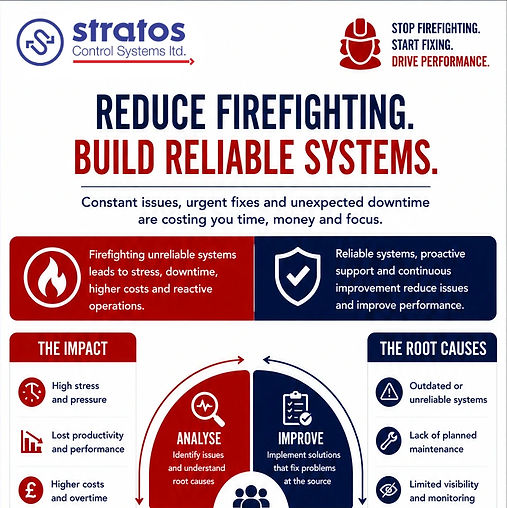
Download the Reduce Firefighting Guide
Constant firefighting rarely feels sustainable. Over time, it increases downtime, raises costs, and prevents teams from focusing on long-term improvements and operational efficiency.
How Stratos Helps You Break the Firefighting Cycle
We help engineering teams:
-
Reduce downtime
-
Improve automation reliability
-
Standardise systems
-
Modernise infrastructure
-
Build scalable, maintainable environments
