Why Automation Projects Go Over Budget (And How to Avoid It)
Automation projects are often approved with clear goals — improve performance, reduce downtime, and modernise systems.
However, many projects exceed budgets, miss deadlines, or fail to deliver expected results.
Understanding why automation projects go wrong is critical to delivering successful outcomes and protecting your investment.
Why Automation Projects Fail
Automation projects rarely fail due to a single issue. Most problems arise from a combination of planning gaps, unclear scope, and technical challenges.
Common failure points include:
-
Poorly defined project scope
-
Incomplete system understanding
-
Lack of standardisation
-
Inadequate documentation
-
Underestimating complexity
These issues often lead to delays, cost overruns, and operational disruption.
The Real Cost of Project Overruns
When automation projects go over budget, the impact goes beyond the initial spend.
Financial impact
-
Increased project costs
-
Additional engineering time
-
Rework and redesign
Operational impact
-
Extended downtime
-
Delayed production improvements
-
Disruption to operations
Strategic impact
-
Loss of confidence in automation investment
-
Delayed future upgrades
-
Increased risk exposure
What Causes Automation Projects to Fail
Most automation projects fail long before installation begins. In this video, we explain the real reasons industrial automation projects fail, and how to avoid costly mistakes.
Common Causes of Automation Project Failure
Poor project scoping
Unclear requirements lead to scope creep, redesign, and unexpected costs.
Legacy system complexity
Older systems are often poorly documented, making integration and upgrades more difficult than expected.
Lack of standardisation
Inconsistent control systems across sites increase engineering time and complexity.
Inadequate planning for downtime
Failing to plan system changeovers properly can extend downtime and disrupt operations.
Weak communication between stakeholders
Misalignment between engineers, operators, and management can delay decision-making.
What a Well-Delivered Automation Project Looks Like
Successful automation projects follow a structured approach.
Clear and defined scope
All requirements are understood before work begins.
Strong documentation
Accurate system drawings and structured designs reduce risk and improve efficiency.
Phased implementation
Where possible, upgrades are delivered in stages to minimise disruption.
Risk management
Potential issues are identified and mitigated early in the project.
Experienced delivery partner
Working with an experienced automation provider reduces uncertainty and improves outcomes.
What Automation Projects Going Over Budget Looks Like in Practice
Automation projects rarely go over budget because of one major mistake. Costs increase due to unclear scope, poor planning, and unexpected technical challenges, leading to delays, rework, and higher overall project spend.
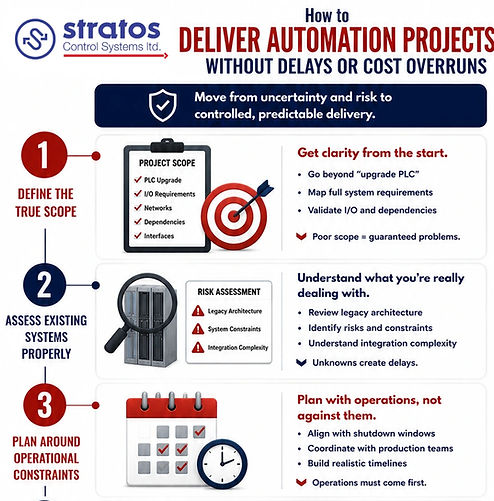
Download the Guide on how to Keep your Automation Project within Budget
Automation projects rarely exceed budget from a single issue. It happens across design, specification, and implementation, where incomplete I/O lists, unclear requirements, and integration challenges create scope changes and additional costs.
How to Deliver Automation Projects on Time and Budget
Define scope clearly from the start
Avoid assumptions and ensure all stakeholders are aligned.
Assess existing systems properly
Understand the condition, limitations, and risks of current systems.
Plan for downtime
Schedule upgrades to minimise operational impact.
Standardise where possible
Reduce complexity by using consistent designs and approaches.
Choose the right automation partner
A structured, experienced partner will manage complexity and reduce risk.
What to Expect From a Good Automation Partner
A reliable automation partner should:
-
Clearly define scope and deliverables
-
Identify risks early
-
Provide structured designs and documentation
-
Deliver projects in a controlled, phased manner
-
Communicate clearly throughout the project
Avoiding Costly Mistakes in Automation Projects
Many project failures are avoidable with the right planning and expertise.
Taking a structured approach from the outset reduces risk, controls cost, and improves long-term system performance.

